How Much Does a Spider Exterminator Cost?
Quick answer
$100–$500 · avg $200
A professional spider treatment costs $100–$500, and most one-time visits land near $200. Venomous species — black widow, brown recluse — sit at the top of the range, while ongoing prevention folds into a general pest plan from about $40 a month.
| Treatment | Typical range | Average | Notes |
|---|---|---|---|
| Spider treatment | $100–$500 | $200 | — |
| Home size | Typical range | Average |
|---|---|---|
| Apartment / under 1,000 sq ft | $80–$400 | $160 |
| 1,000–2,000 sq ft | $100–$500 | $200 |
| 2,000–3,000 sq ft | $120–$600 | $240 |
| Over 3,000 sq ft | $140–$700 | $275 |
What actually moves the price
Spider work is priced like most general pest work — a service call plus scope — and lands in the $100–$500 band published by Angi’s March 2026 and HomeGuide’s January 2026 guides. On Thumbtack, real completed spider jobs ran $109–$261 as of April 2026, which is why we call $200 the honest average rather than the top of the range. Four things decide where in the band you fall:
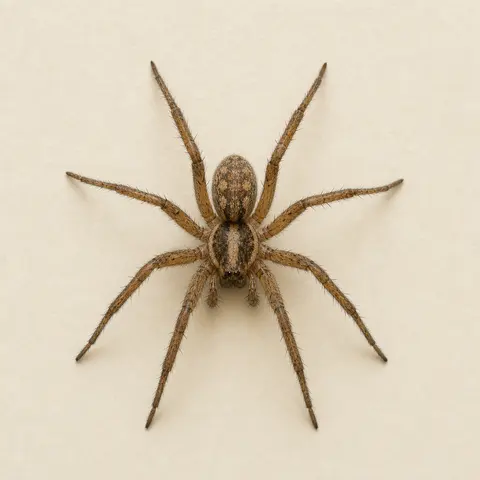
Species. Ordinary web-builders — house spiders, cellar spiders, orb weavers — are the cheap end: knock down webs, treat entry points, done. Black widows and brown recluses change the job. Technicians switch to crack-and-crevice work with dusts in garages, basements and storage, wear-and-glove work goes slower, and a follow-up visit is standard. That is the $400–$500 end.
Home size and clutter. More linear feet of baseboard, more eaves, more stored boxes — more time. A 3,000+ sq ft home with a packed garage can double the bill of a small apartment, which is exactly the spread the size table above shows.
Interior, exterior, or both. A perimeter-only spray costs less but does less: most spider pressure comes from outside lighting, vegetation touching walls, and gaps at grade. A proper first visit treats both sides and includes web and egg-sac removal — one egg sac can hold several hundred spiderlings.
One-time vs recurring. If spiders come back every season, the underlying issue is usually the insect population they feed on. A quarterly general pest plan ($100–$300 per visit) treats the food chain, not just the spiders — often the better spend than repeated one-time calls.
The venomous-species upsell — and when it’s real
The scary version of this trade is the technician who identifies every brown spider as a “brown recluse” and quotes a $500 emergency job. Two facts protect your wallet. First, brown recluses have an established range — roughly the lower Midwest and mid-South. If you live outside it, demand the specimen be bagged and identified before paying recluse prices. Second, even a real recluse job is scheduled work, not an emergency: a legitimate company quotes the follow-up in the same contract instead of selling a second “urgent” visit later.
The reverse is also true: in genuine widow or recluse territory, the premium is earned. Dust formulations, protective handling and a mandatory follow-up are real costs, and the cheap $100 spray simply doesn’t reach the harborage these species use.
DIY math vs the pro visit
Run the numbers before booking. Sticky traps, a vacuum with a hose attachment, and a $15 perimeter insecticide handle ordinary house spiders for $20–$60 — DIY genuinely works here more often than for most pests. The professional visit earns its $200 in three cases: venomous species (equipment and safety), recurring pressure that cleanup hasn’t fixed (you have a food- chain problem), and sealed-structure work like weep holes and soffit gaps that takes a ladder and experience. If you’re already paying $100–$300 per quarterly general-pest visit, spider control should be included — ask before paying for it as an add-on.
Spider treatment vs a general pest plan
Most callers don’t actually need a spider specialist. Spiders are a symptom: they set up where prey is. A standard pest control plan — initial visit $125–$300, then $40–$75 monthly or $100–$300 quarterly — controls the ants, flies and roaches feeding them, and reputable companies fold web removal into every scheduled visit. Book a spider-specific treatment when you have a confirmed venomous population or a one-off infestation; otherwise price the plan first. If ants are part of the picture, see our ant exterminator cost guide — the combined visit is usually cheaper than two separate calls.
Spider extermination Cost Calculator
Pick your pest and home details — the estimate updates instantly. Same data as the tables on this site.
Your estimated cost
$100–$500 · avg $200
- Web removal and egg-sac treatment
- Interior + exterior perimeter spray
- Venomous species check (widow/recluse)
- Entry-point sealing advice
- Follow-up window
Estimate for budgeting, not a quote — final pricing always follows an inspection.
Spider extermination cost by state
Prices below are our national range adjusted with state labor (BLS) and price-level (BEA) data — see how we calculate. Full state guides: all 50 states.
| State | Typical range | vs national |
|---|---|---|
| California | $110–$550 | + 10% |
| Texas | $95–$475 | -7% |
| Florida | $100–$500 | + 1% |
| New York | $110–$550 | + 12% |
| Pennsylvania | $100–$500 | -2% |
| Illinois | $100–$500 | + 1% |
| Ohio | $95–$475 | -6% |
| Georgia | $95–$475 | -6% |
| North Carolina | $95–$475 | -4% |
| Michigan | $100–$500 | -1% |